


GEORGIAN CLOISONNÉ ENAMEL ART
S A C H I N O
Irine Makhviladze
GEORGIAN CLOISONNÉ ENAMEL ART
Irine Makhviladze

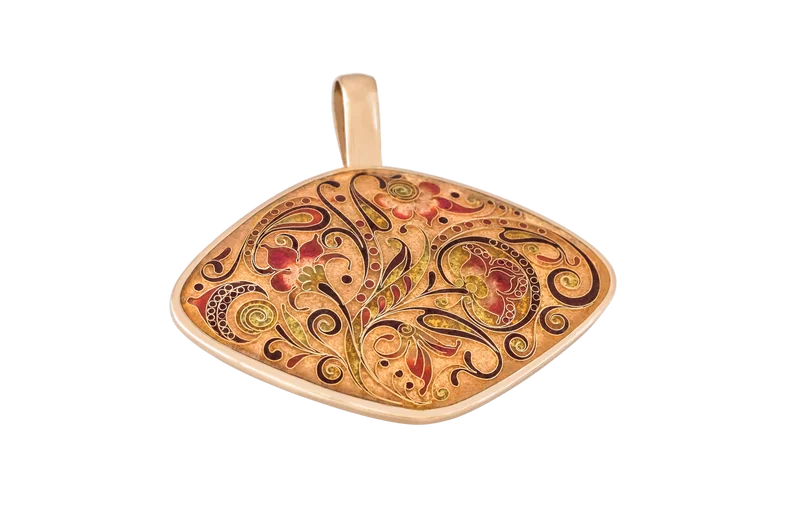
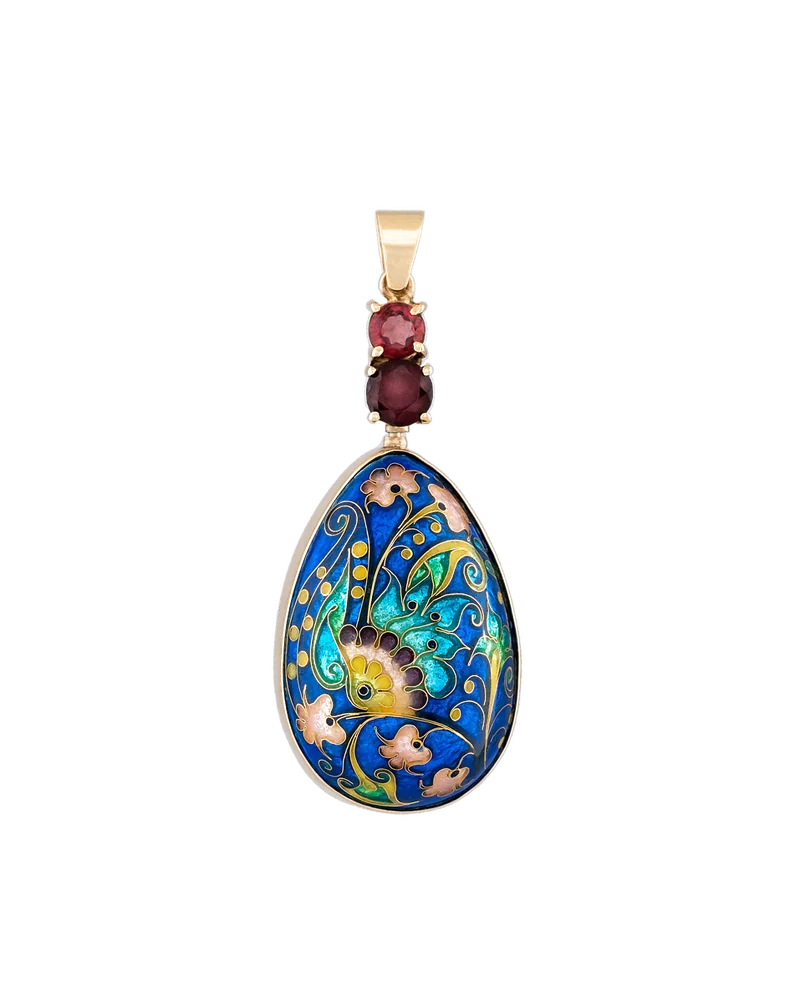
Irine Makhviladze began with a memory: her grandmother's jewelry, small, precise things that held light in a way she never forgot. In 2006, she encountered Georgian cloisonné enamel for the first time. The decision was immediate. This was the craft.
Two decades later, she works from her atelier in Georgia, creating each piece entirely by hand. Gold or silver wire, bent into partitions. Ground glass, placed into cells. Fire, between 750 and 850°C, that transforms powder into permanent, luminous color. No machinery. No shortcuts. Every firing is irreversible.
Her signature is restraint. Where the tradition invites complexity, Irine edits. Simple forms. Refined partitions. The discipline of knowing what to leave out. She describes Georgian enamel in one word: ნატიფი. Her work proves it.
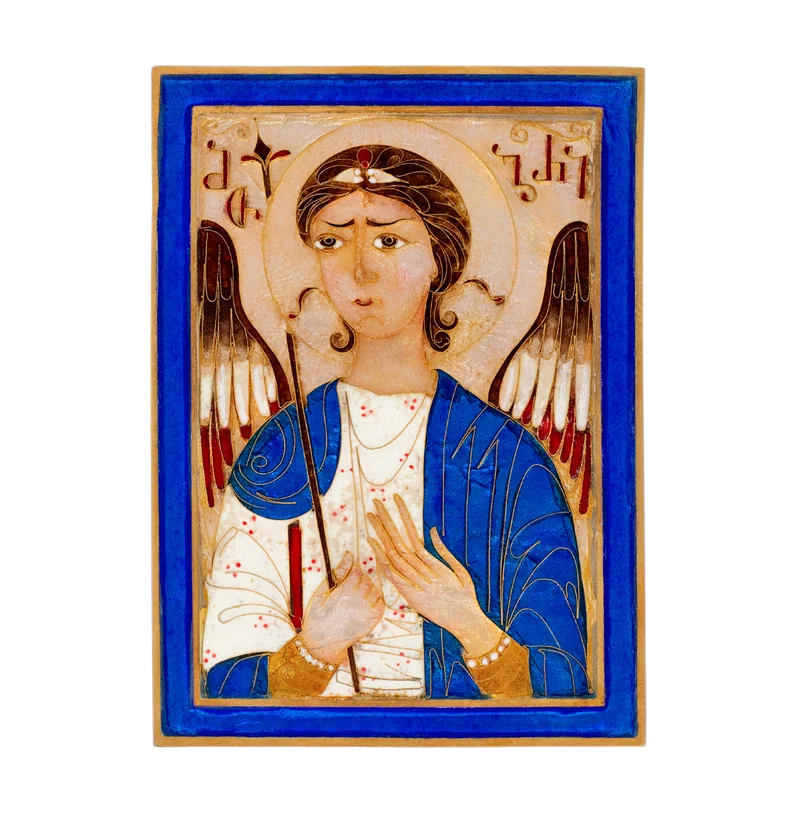
The influences are deliberate and wide: Renaissance precision, clean architectural geometry, boldness with color. The Georgian tradition runs beneath all of it, the botanical scrollwork of medieval gospel covers, the luminous enamel icons, an ornamental language over a thousand years old. It's present in every piece. Never announced.
Each work takes weeks. The process doesn't compress. Wire is placed, fired, adjusted, fired again. Glass becomes light. Metal becomes line. What remains is handmade, delicate, refined, exclusive, and permanent.
"I knew from the first moment. This was it."
— IRINE MAKHVILADZE
← Drag to explore →



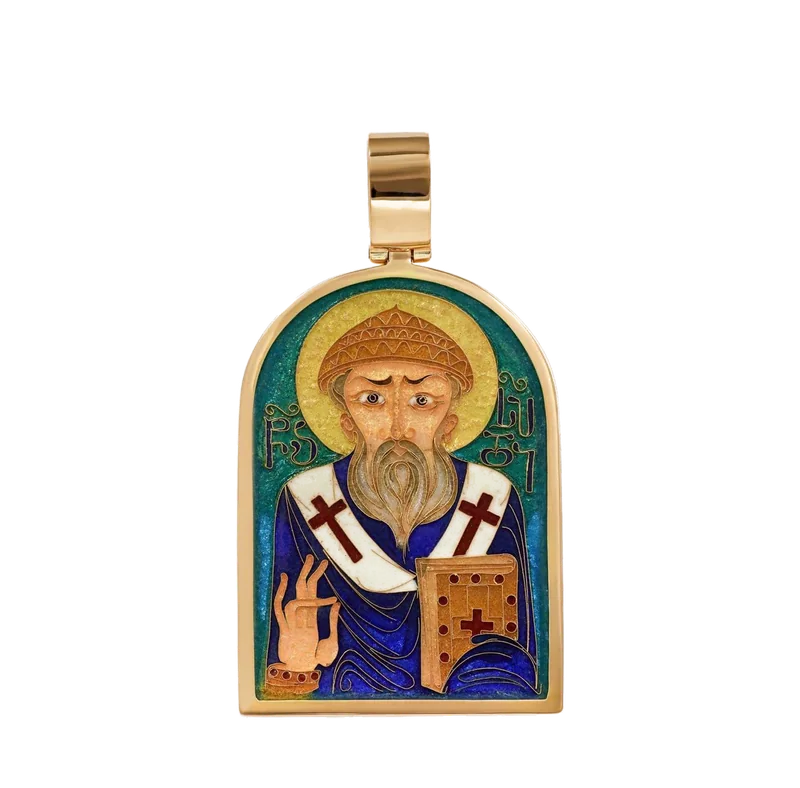
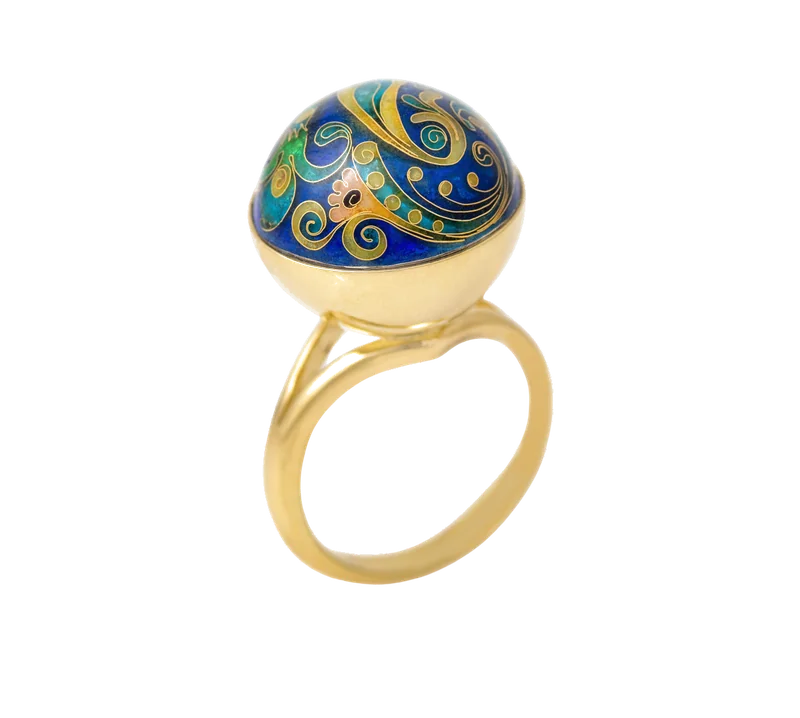
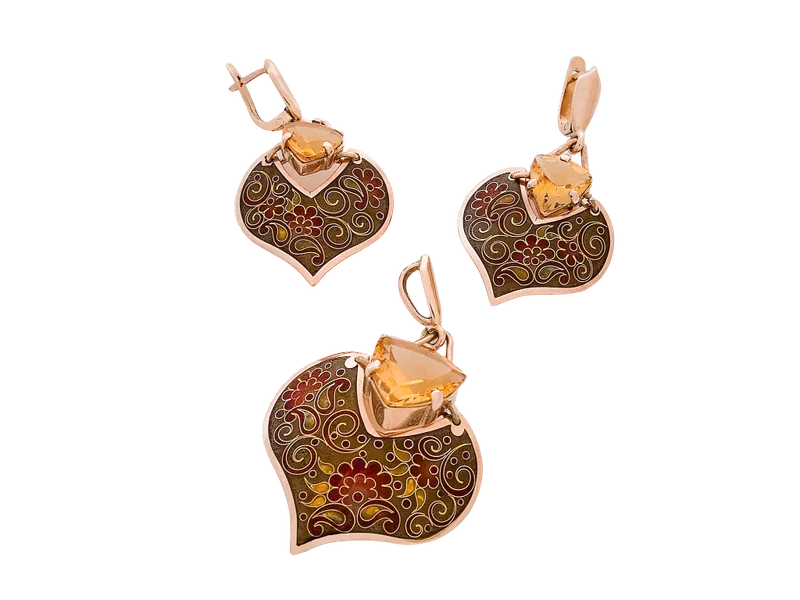
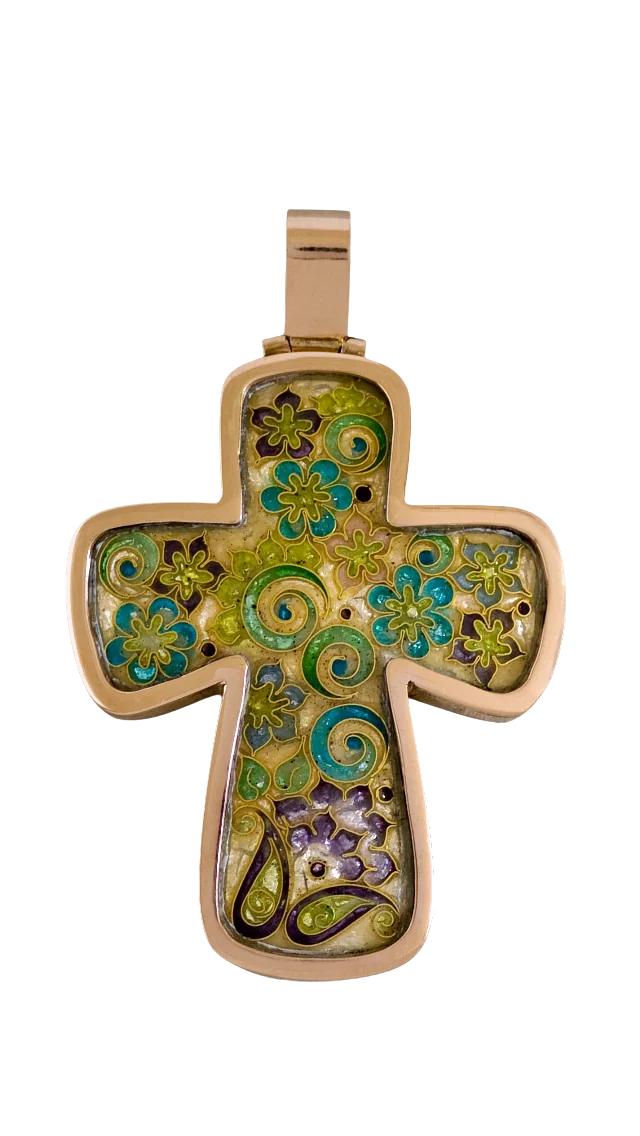
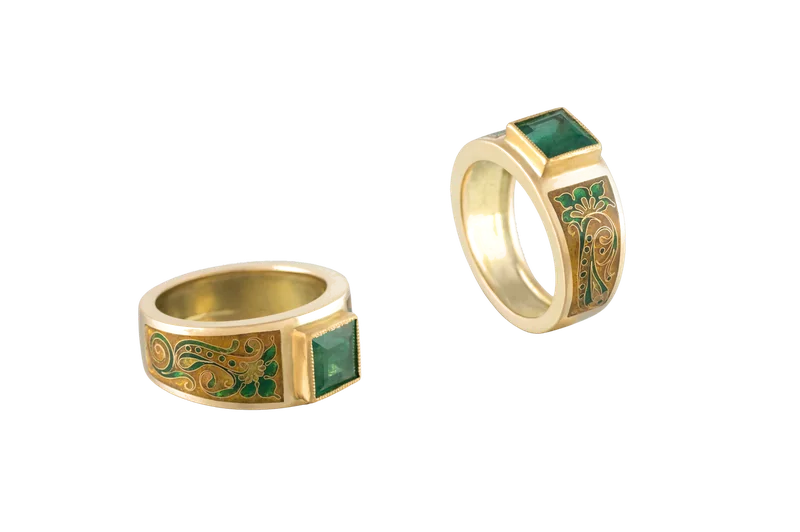

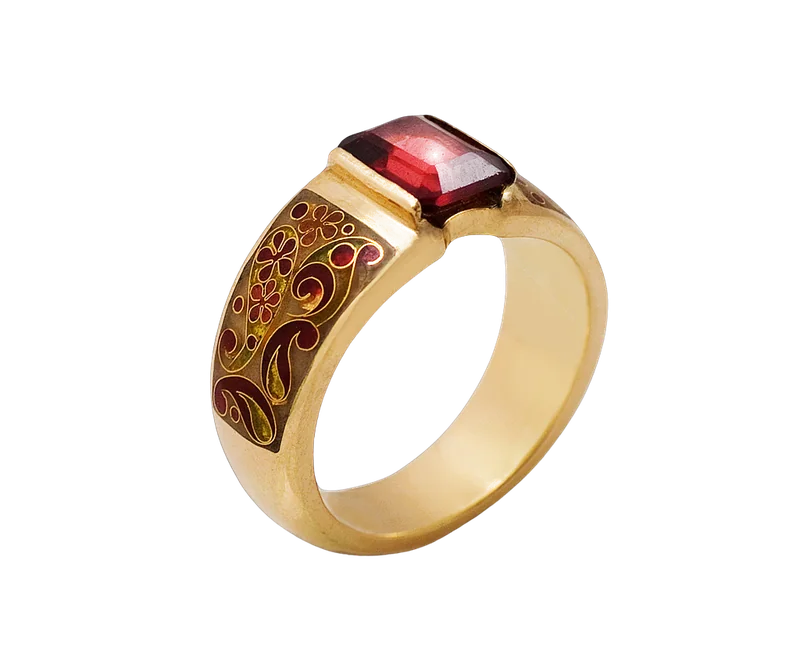
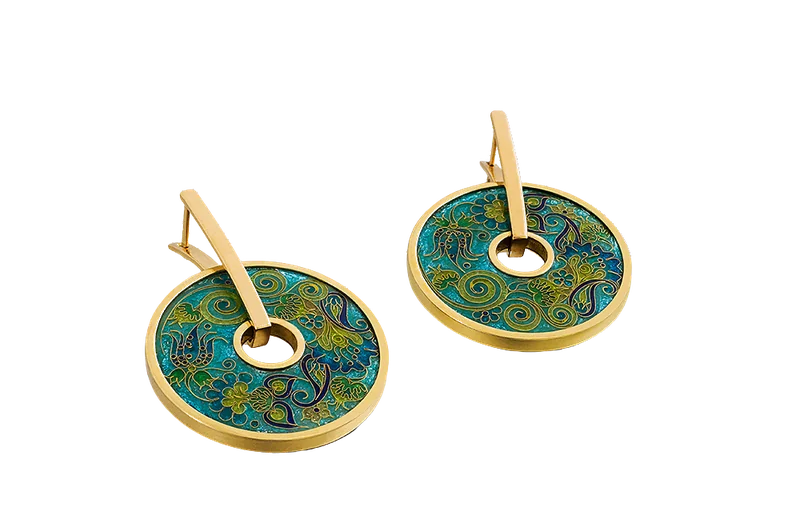
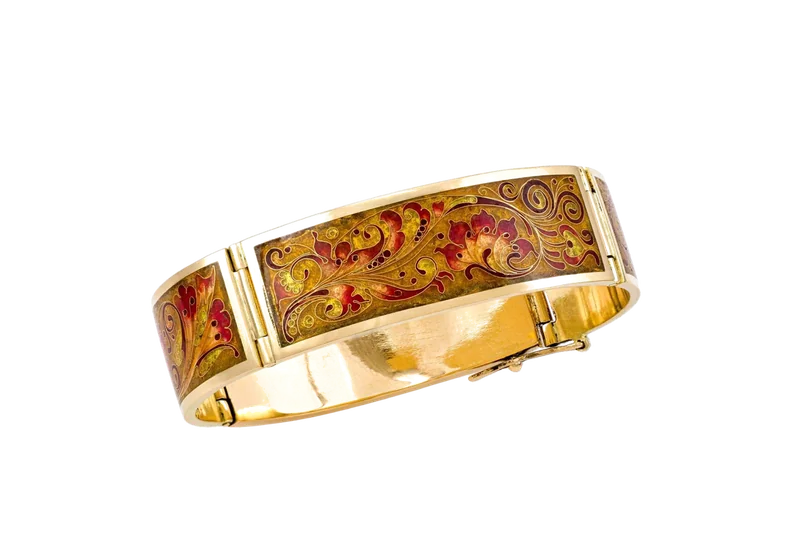
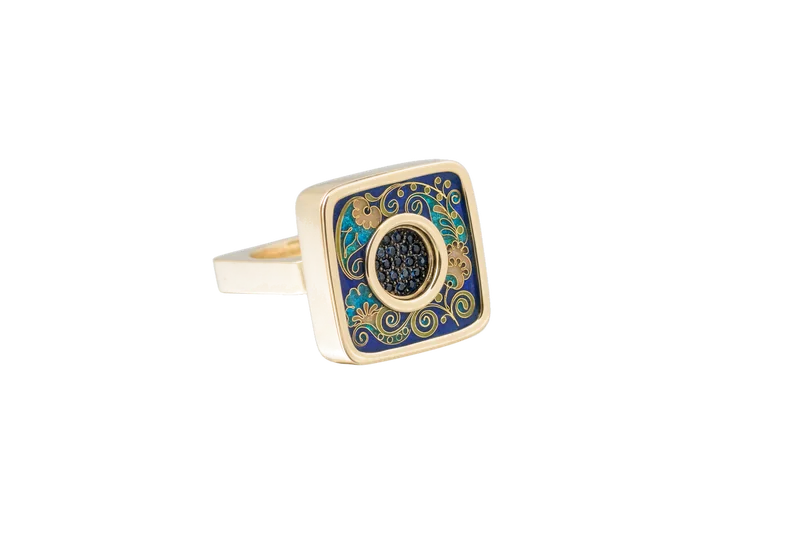
A technique born in fire. Perfected over twelve centuries.
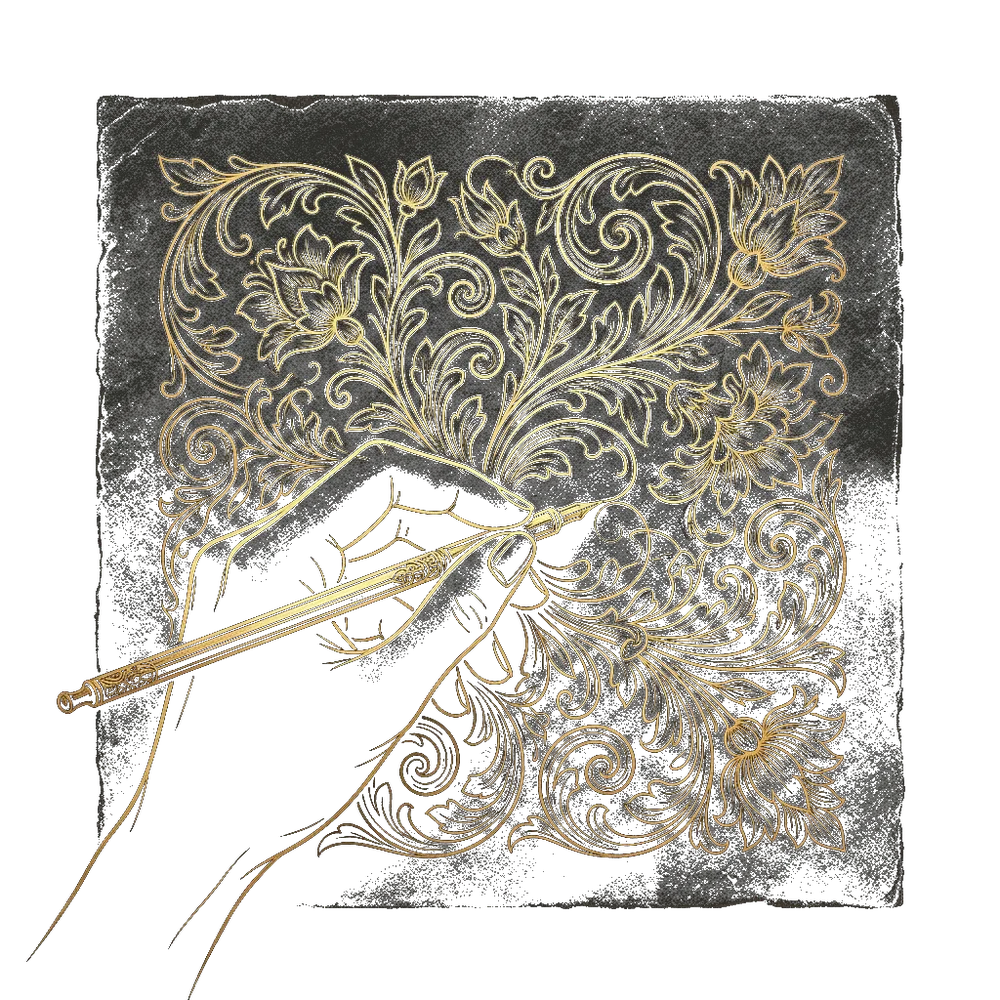
Every piece begins as a drawing. The pattern is transferred to metal, each line a commitment. What is drawn will become wire.

Gold or silver wire, thinner than a hair, is bent by hand and soldered to the base. Each partition forms a cell. Each cell will hold color.

Ground glass is placed into each cell by hand. Colors are mixed, layered wet, built up slowly. The palette is chosen once. There is no revision.

The piece enters the kiln between 750 and 850°C. Glass fuses to metal. This step is repeated, six, sometimes eight firings. Each one irreversible.
Georgian cloisonné enamel emerges in Caucasus monastery workshops. Monks adorn icons, reliquaries, and gospel covers with fired glass and gold wire.
The golden age. Under Queen Tamar, Georgian enamel reaches its peak. The Khakhuli Triptych, one of the greatest surviving works of medieval art, is created.
Mongol invasions, centuries of upheaval. The tradition nearly disappears. Knowledge passes in fragments, hand to hand, generation to generation.
A small number of Georgian artists keep the technique alive. Irine Makhviladze continues it, not preserving a relic, but making living fine art.
Every piece begins with a conversation. Whether you are a collector, a curator, or simply drawn to the work, we welcome your inquiry.
CONTACT THE ATELIER